

Introducing YOMO’s Hospitality — Rooted in the Spirit of Wabi-Sabi
We present YOMO’s unique approach to hospitality, inspired by the Japanese aesthetic philosophy of WABI-SABI. How about discovering a moment in quiet serenity, gently restoring and realigning yourself?
1.The uniquely Japanese aesthetic sensibility of wabi-sabi, cultivated over time in Japan
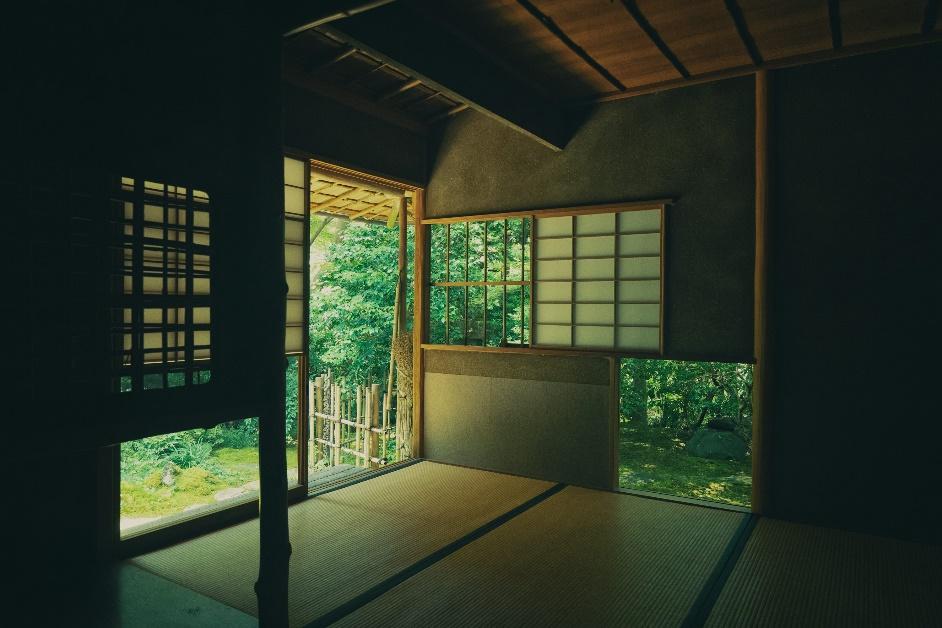
What is Wabi-Sabi?
Wabi-sabi can be described as one of Japan’s multifaceted aesthetic sensibilities and value systems, developed over time within its culture.
Although often grouped together as a single concept, wabi-sabi originates from the classical Japanese words “sab(u)” and “wab(u).”
Sab(u) conveys meanings such as desolation, the fading of light and color, and the emergence of beauty through age and weathering.
Wab(u) expresses emotions of distress, uncertainty, hardship, and a quiet, poignant sadness.
Since ancient times, the Japanese have found sab(u) and wab(u) within nature, imperfection, and the absence or incompleteness of things—discovering within them a sense of beauty and fulfillment. Today, this sensibility has come to represent Japanese culture as the concept of wabi-sabi.
The History of the Wabi-Sabi Concept
It is said that the concept of wabi-sabi had already begun to take shape during the Heian period, around the time of the Kokin Wakashū. It was regarded as a key concept in discussions of the refined beauty of waka poetry, and has since remained a central aesthetic value in Japanese literature.
As time passed, the sensibility of wabi-sabi merged with various forms of art and religious thought, gradually evolving into a deeper profound spiritual aesthetic. It is said to have been embodied particularly within the culture of tea ceremony.
※Fig. 1 (Left): Fujiwara no Shunzei, a poet of the Heian period. He is regarded as a pioneer in incorporating the concept of sabi—the appreciation of tranquil, weathered beauty and the emotions it evokes—into waka poetry.
※Source: Nagoya Sword Museum, “Fujiwara no Shunzei (Koutaigogu-no-Daibu Shunzei) and the Hyakunin Isshu,” List of Poets of the Ogura Hyakunin Isshu.
https://www.meihaku.jp/hyakunin-isshu-kajin/kajin-fujiwarano-toshinari/
※Fig. 1 (Right): Murata Juko, a Zen monk of the Muromachi period, is considered the founder of Wabicha (the “wabi” style of tea ceremony). He embraced the concepts of simplicity and imperfection, elevating the humble act of sincerely apologizing for being unable to provide “fine” items into a profound aesthetic and spiritual practice known as “Wabi consciousness” and “Wabi behavior.”
※Source: Nara City Tourism Association, “What is the Juko Tea Ceremony?” 12th Nara Grand Tea Ceremony – Juko Tea Ceremony.
It is said that Sen no Rikyu perfected the art of wabi-cha by building upon the established traditions of chanoyu (the Way of Tea). Serving as the tea master for both Oda Nobunaga and Toyotomi Hideyoshi, Rikyu introduced specialized tea bowls, simplified the temae (tea preparation procedures), popularized the soan (thatched-hut) style tea room, and designed the roji (tea garden).
By removing as many recreational elements
By removing the aspects of entertainment from the tea ceremony as possible and using simple utensils within a small, intimate tea room, he created a style of wabi-cha defined by a profound sense of aesthetic tension. Rooted in the philosophy of finding beauty in insufficiency, he further refined the aesthetic sensibilities and values of wabi-sabi.
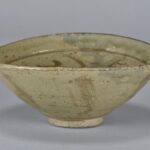
※Fig. 2 (Left): Juko Seiji (Celadon) Tea Bowl. Beautiful celadon is typically achieved only when the perfect conditions of pottery wheel technique, glazing, and kiln firing are perfectly met. However, Murata Juko, the founder of wabi-cha, began using celadon with a dull, muted tone caused by the absence of one of these conditions in his tea ceremonies.
※Source: Cultural Heritage Online, “Juko Seiji Tea Bowl,” List of Works.
https://online.bunka.go.jp/heritages/detail/478214
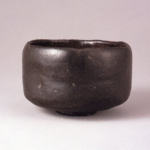
※Fig. 2 (Right): Kuro-raku (Black Raku) Tea Bowl. This tea bowl embodies “the beauty of utility” (yo no bi). It was commissioned by Sen no Rikyu, who extracted the essence of wabi from traditional, unintentionally formed bowls and purposefully had this style created to reflect his aesthetic vision.
※Source: Cultural Heritage Online, “Kuro-raku Tea Bowl,” List of Works.
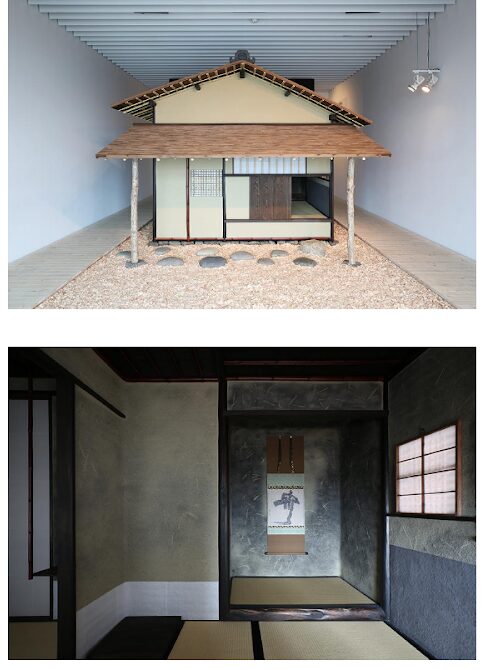
※Fig. 3: Full-scale recreation of the National Treasure “Taian.” This is a life-sized replica of the ultra-minimalist, two-tatami tea room designed by Sen no Rikyu. The space is reduced to the absolute minimum, where host and guest sit so closely that their knees nearly touch, requiring highly refined movements from both. It is believed that Rikyu sought to foster a profound spiritual exchange through this atmosphere of intense aesthetic tension.
※Source: Mori Art Museum, “Japan in Architecture” Project Introduction #2: Taian.NEWS.
In the Way of Tea, the spiritual exchange between the host and the guest is a vital element that defines the essence of wabi-sabi.
The host’s role extends far beyond the temae (tea-preparing ritual) and physical movements. They personally create the entire atmosphere of the gathering—tailoring it to the specific guest and the changing seasons—by purifying the roji (garden path) and tea room, carefully selecting the tea utensils, and preparing the sweets and kaiseki meal. In response, the guest accepts this hospitality, admires the thoughtfully curated setting, and offers a respectful bow before drinking the tea as an expression of gratitude for the host’s efforts. While this sequence of actions has been passed down today as kata (prescribed forms) in the Way of Tea, it is the underlying etiquette and mutual consideration between host and guest that allow one to feel a sense of warmth, even within an atmosphere of tension and tranquility.
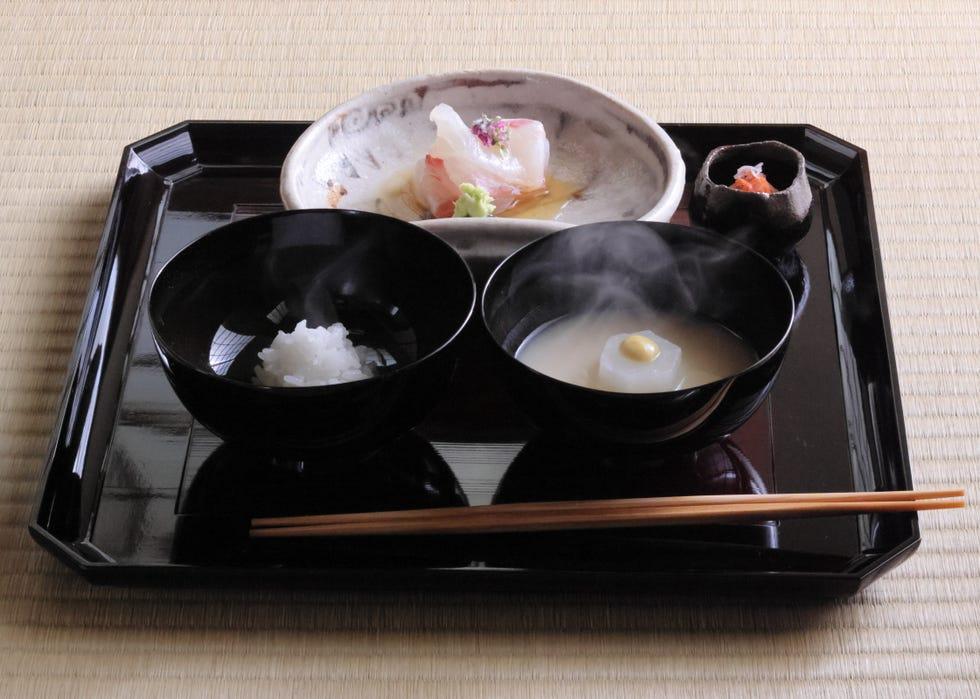
※Fig. 4: Cha-kaiseki: Although these are simple dishes intended to complement the tea, they embody a hospitality where every detail is infused with care for the guest—such as incorporating seasonal ingredients and serving warm dishes at the precise moment the guest is ready to eat.
※Source: Fujingaho, “What is Kaiseki Cuisine? Learning the Order and Manners of the Tea Ceremony through Video,” Lifestyle.
https://www.fujingaho.jp/lifestyle/tea-flower/a39244779/kaiseki-kaiseki-differences-vol2/
About Omotenashi
Omotenashi involves anticipating a guest’s needs before they are even expressed. It is the art of neither over-interfering nor being neglectful. I believe that the Japanese people, with their refined ability to “read the air” (kuuki wo yomu), were uniquely positioned to develop this culture of hospitality—one that welcome the guest through the seamless harmony of space, timing, and conduct.
In today’s globalized world, Japan’s omotenashi culture has garnered international attention and is being integrated into various industries. For instance, in hospitality, tourism, aviation, infrastructure, and retail, this philosophy manifests as “quiet” service, mindful spatial design, immersive stays rooted in local culture, polite interactions, and courtesy of time. While these may be taken for granted within Japan, looking at them from a global perspective brings the distinctiveness of Japanese culture into much sharper focus.
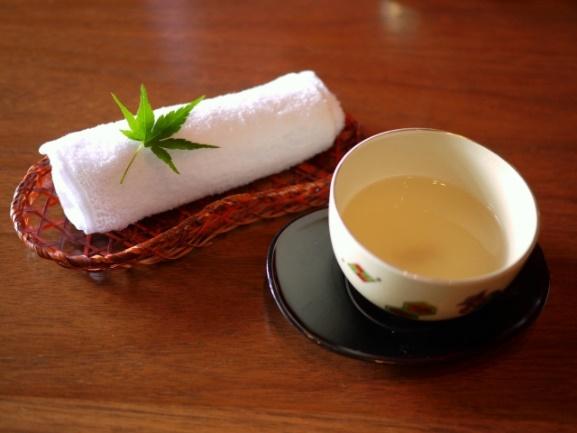
The oshibori (wet towel) is a signature element of Japan’s omotenashi culture. Its origins date back to the Edo period, when inns began offering travelers with a bucket of water and a cotton tenugui cloth to refresh themselves. Today, the practice of offering oshibori is reportedly spreading to restaurants worldwide as a form of non-verbal hospitality.
2.The Meaning of Omotenashi at YOMO
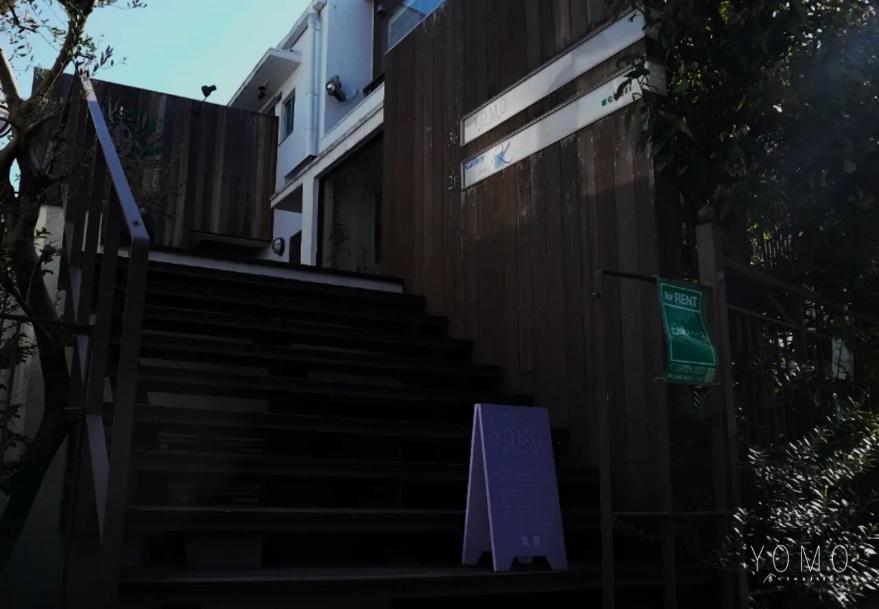
Since our opening in 2022, YOMO has been dedicated to the pursuit of omotenashi through the practice of yomogi-mushi (Yomogi steaming). To us, omotenashi means anticipating attuning to the guest’s heart to refine the atmosphere—a devotion so seamless it remains invisible —and the warm words and actions that naturally flow from that intention.
This spirit is not merely an inherent national trait of the Japanese people; similar cultures of hospitality exist in many forms throughout the world. However, over the course of history, the Japanese have cultivated this philosophy of consideration as a social and cultural ethic, manifesting that spirituality in every corner of daily life as the omotenashi we see today.
Located in the center of Tokyo, we offer a moment to escape the bustle, if only for a while, to nourish yourself. We invite you to experience a time of harmony for the heart, body, and spirit.
3.Hospitality Through Yomogi-mushi
Yomogi-mushi (Yomogi steaming) is a traditional folk remedy that originated and evolved in China and Korea before being introduced to Japan. While the steaming ritual itself lasts only about 15 minutes, we invite you to experience the essence of YOMO’s omotenashi, concentrated into this brief yet profound experience.
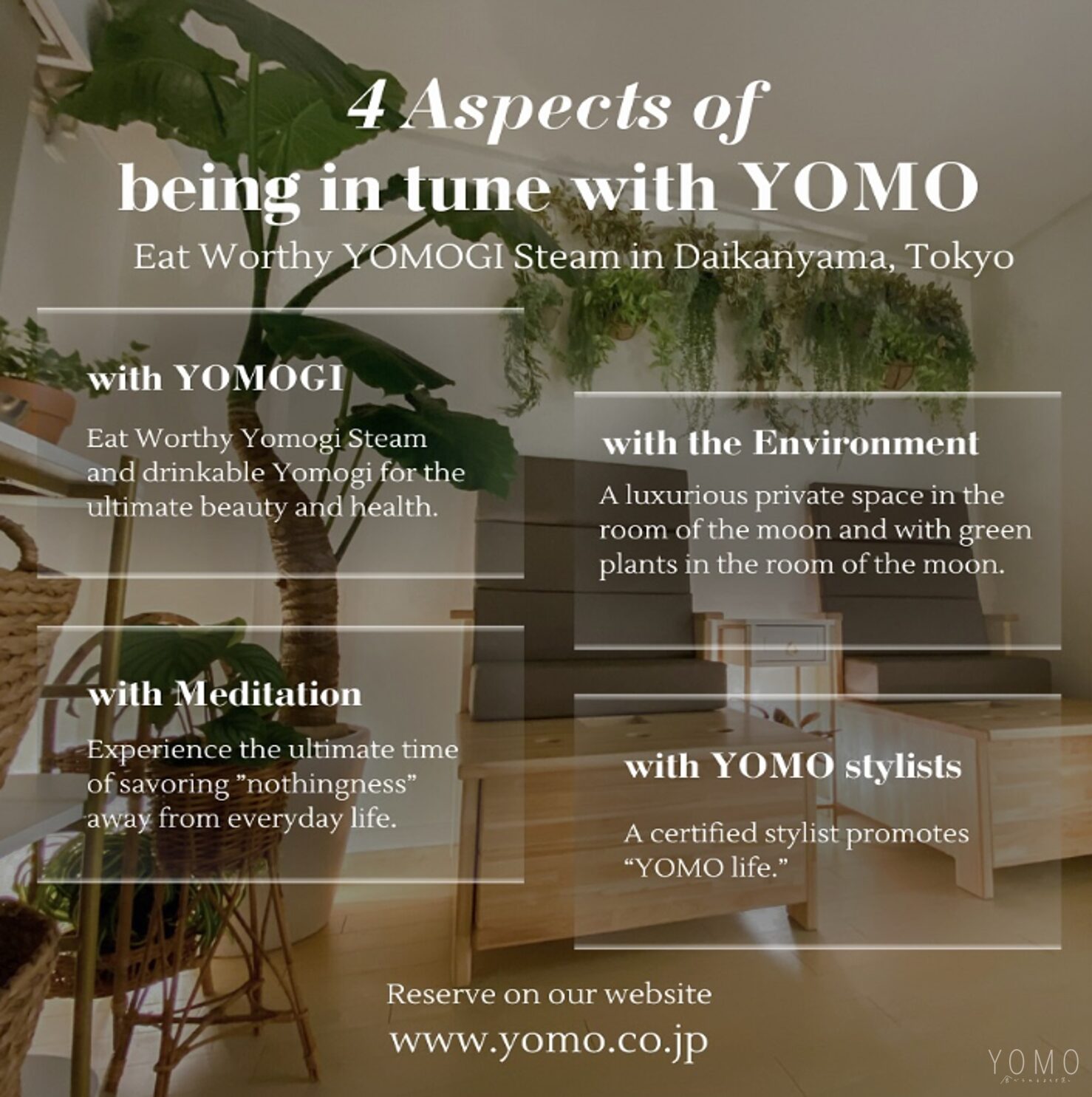
Total Rejuvenation with 100% Domestic Yomogi
All yomogi used at YOMO is 100% domestically sorced and is of such high quality that it is safe enough to be eatworthy. Because the yomogi steam is absorbed directly through the skin and mucous membranes, we are uncompromising in our commitment to using only the safest and most safe ingredients.
・Pesticide-free and additive-free: Cultivated by designated domestic farmers without the use of chemicals or artificial coloring.
・Hand-picked by farmers: Harvested manually rather than by machine to ensure a pure, clean essence free from impurities.
・Natural pest control: Pests are removed using only natural drying methods, without any reliance on chemical agents.
・Pure yomogi fragrance: Since we do not blend our yomogi with other herbs, there are no off-putting or chemical odors—allowing you to enjoy the authentic, original aroma of the plant.
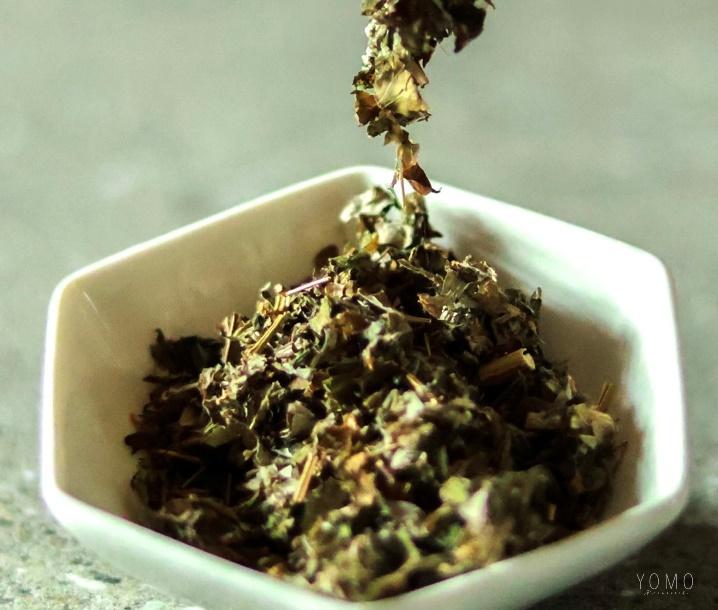
The yomogi tea served to our guests is made from the same 100% domestically sourced yomogi. We also offer these premium tea bags for purchase at the YOMO shops.
Even after enjoying your tea at home, the used tea leaves can be placed directly into your bathtub to create a yomogi bath. This allows you to absorb the yomogi through your skin while relaxing in the warm water. Furthermore, the tea can be used as a gargle for oral hygiene, and the dried, roasted grounds serve as an excellent natural deodorizer for shoe cabinets. Yomogi offers a vast array of uses; please feel free to ask a YOMO Stylist for more details.
Find Your Balance with a YOMO Stylist
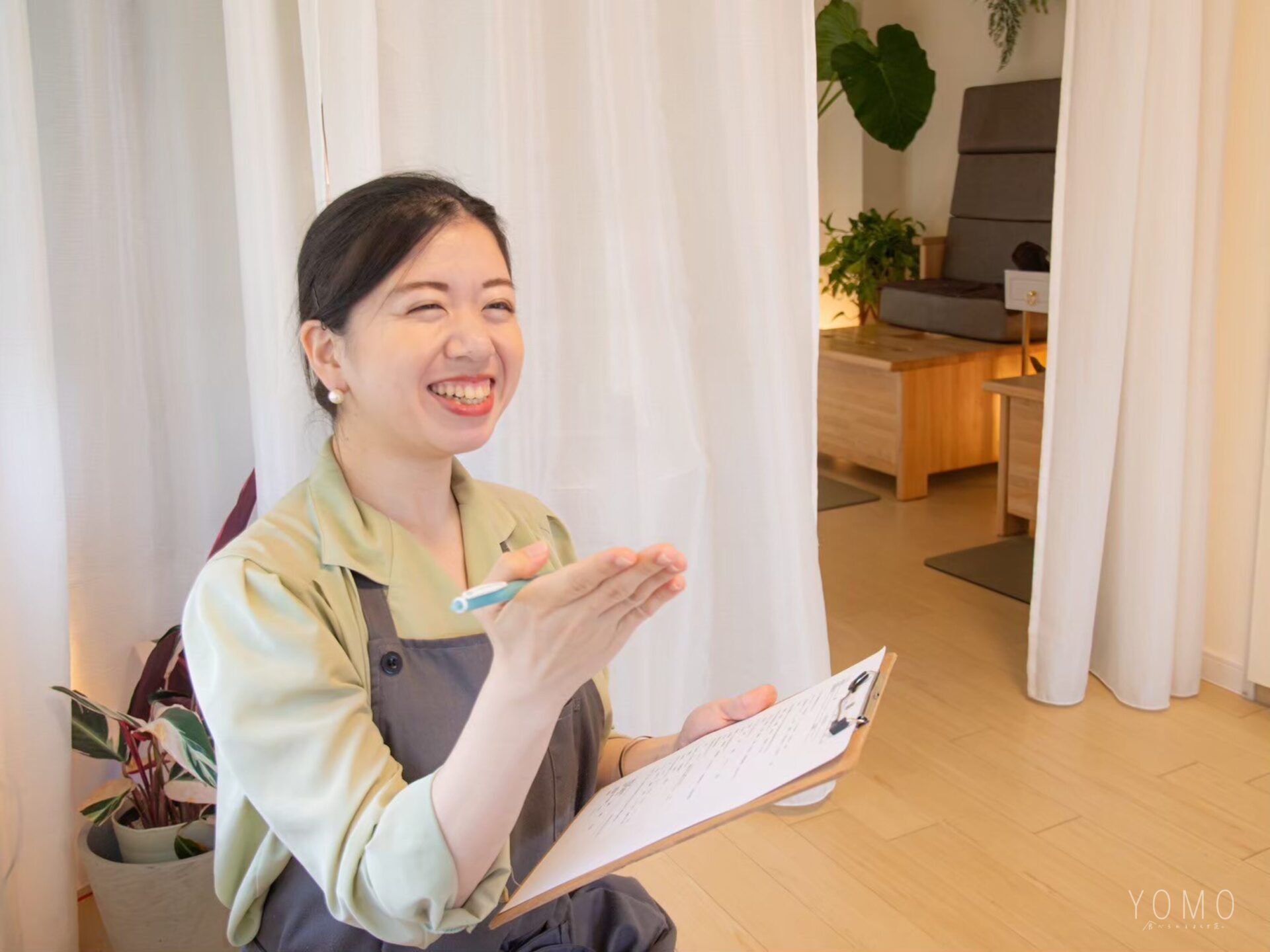
Counseling by Certified Specialists
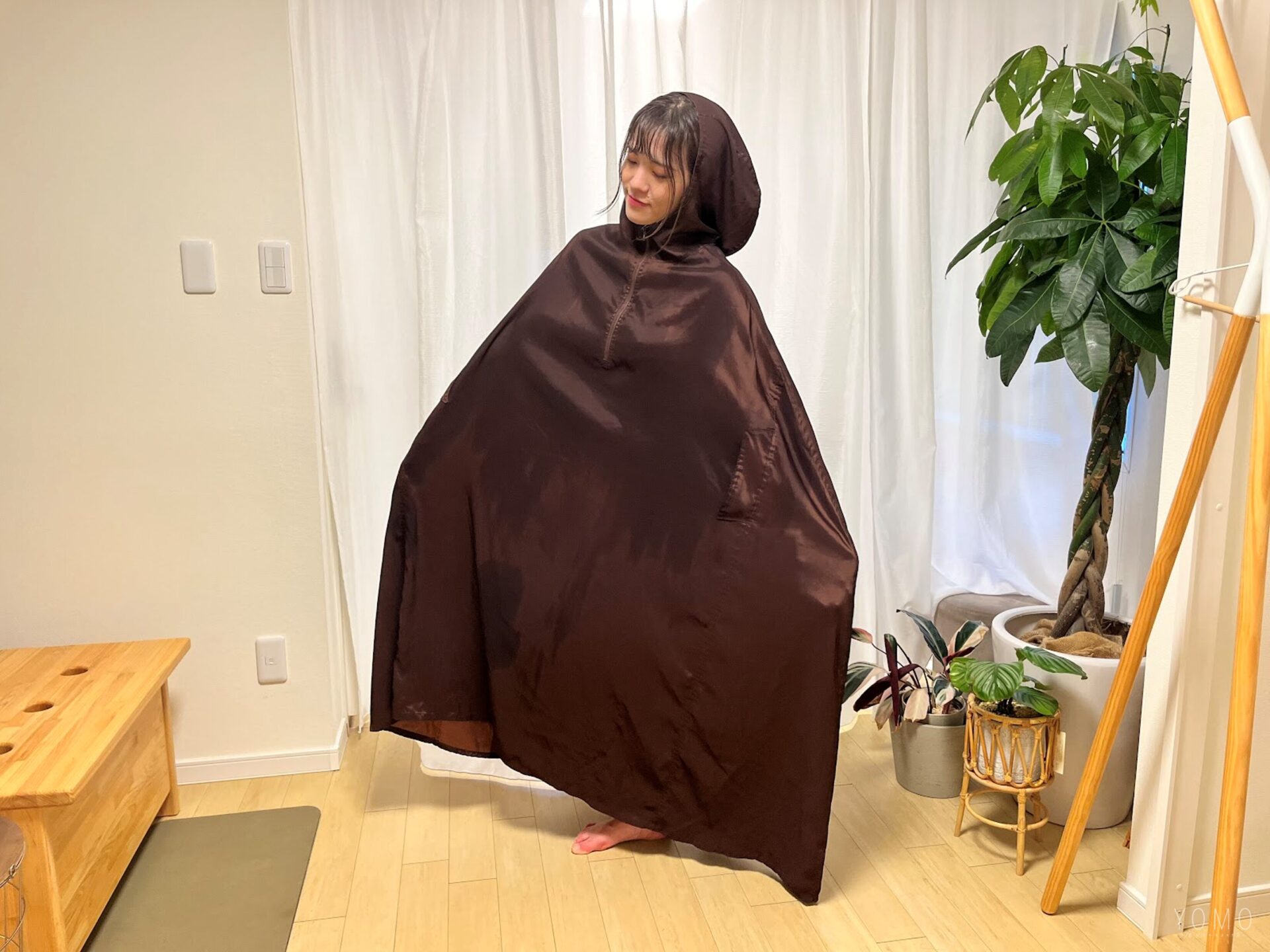
Before and after your session, a certified YOMO Stylist—who has passed our rigorous certification progress—will provide a personalized consultation. By carefully assessing your current health condition, we ensure a safe experience and remain prepared to respond swiftly to any physical changes or reactions after the steaming ritual.
During the pre-session consultation, we listen to your goals and concerns to suggest the most effective steaming method and provide important safety guidance. After your session, we follow up on your physical state and offer personalized advice to support your long-term beauty and wellness journey.
A Space for Harmony To ensure you can fully immerse yourself in the premium yomogi-mushi experience, we pay meticulous attention to every detail of our environment, including spatial design, lighting, and room temperature.
We offer two distinct types of rooms: “The Sun” and “The Moon.” Both feature a simple, gender-neutral interior designed to be welcoming and comfortable for all guests, regardless of age or gender.
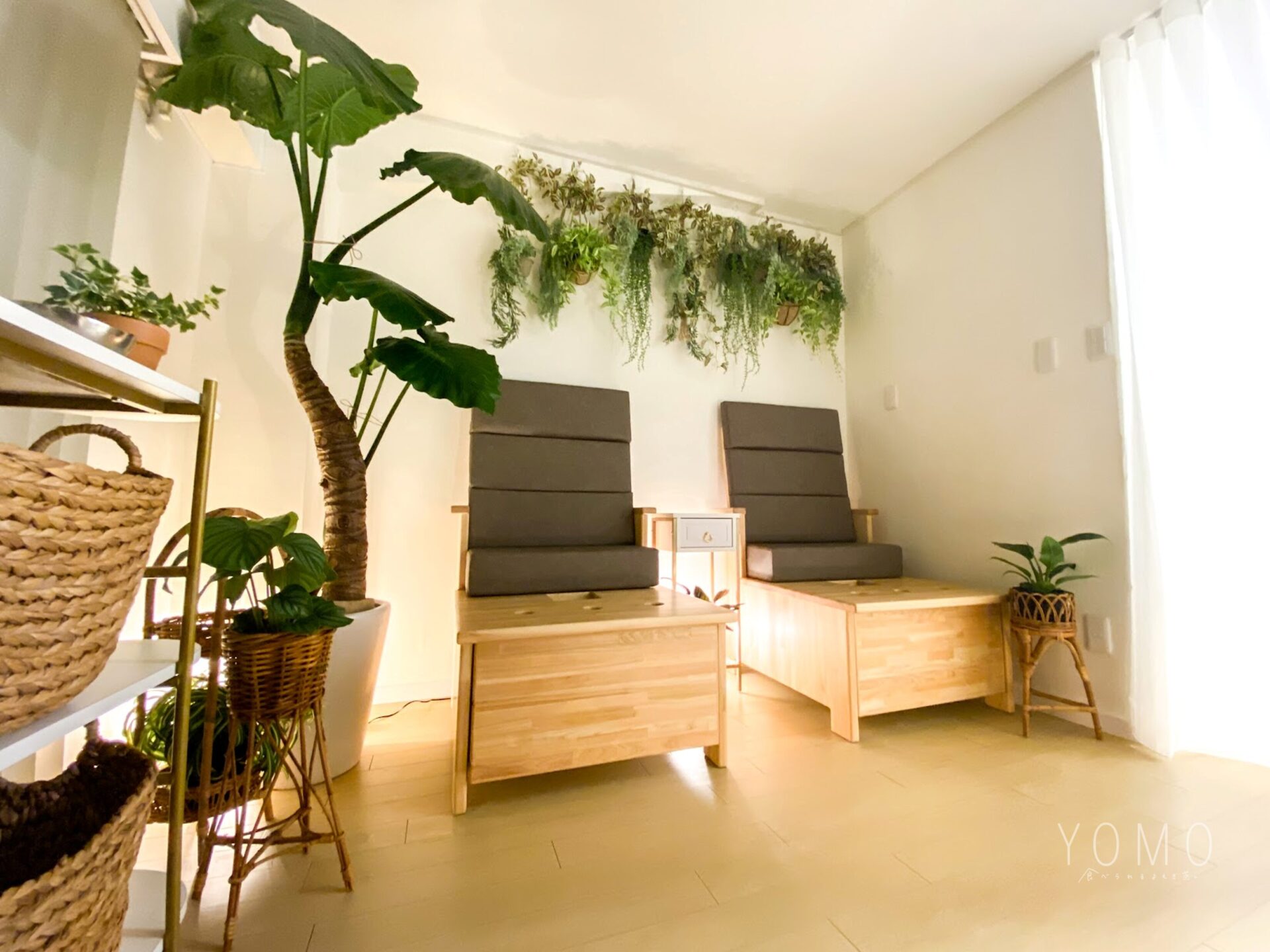
“The Sun” room is highly recommended for first-time guests. It is a healing sanctuary bathed in warm, natural-style light and filled with lush greenery. In addition to the Yomogi steaming, you may also choose to add an optional footbath to your session. For more details, please consult a YOMO Stylist. Whether you wish to enjoy a quiet moment alone or share a special moment with a loved one, this space is designed for your comfort.
Finding Balance through Meditation
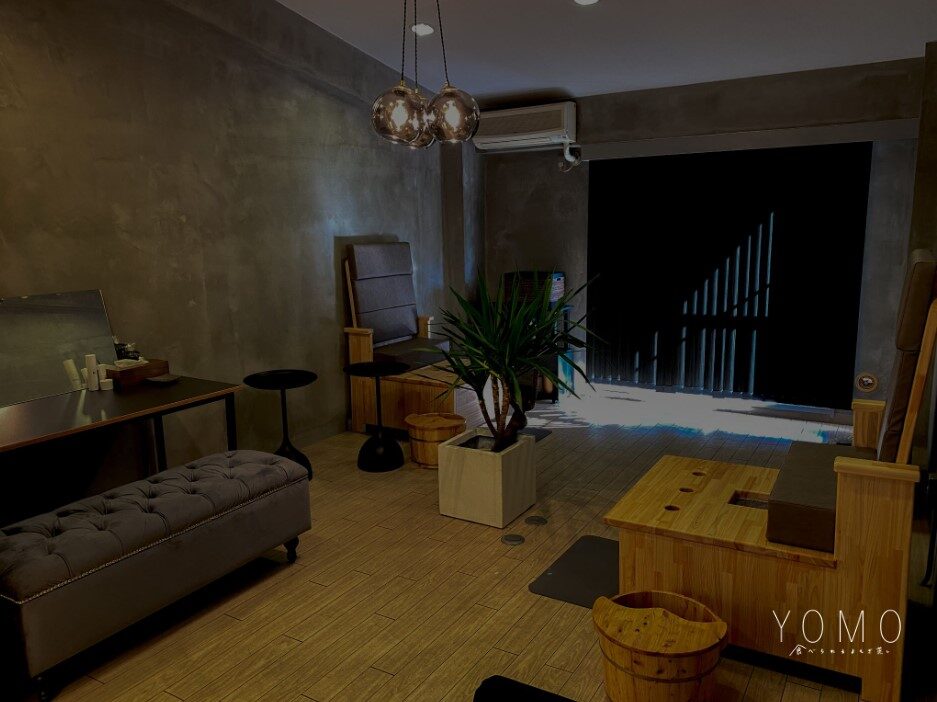
“The Moon” is a space designed with exposed concrete, specifically curated for finding balance through meditation.
In addition to the same Yomogi steaming and footbath offered in “The Sun,” this room incorporates dedicated time for meditation. It is perfect for those who wish to organize their thoughts and clear their minds, those who want to face their inner selves and immerse themselves in a moment of “emptiness,” or those who simply wish to enjoy a private, intimate space with a loved one.
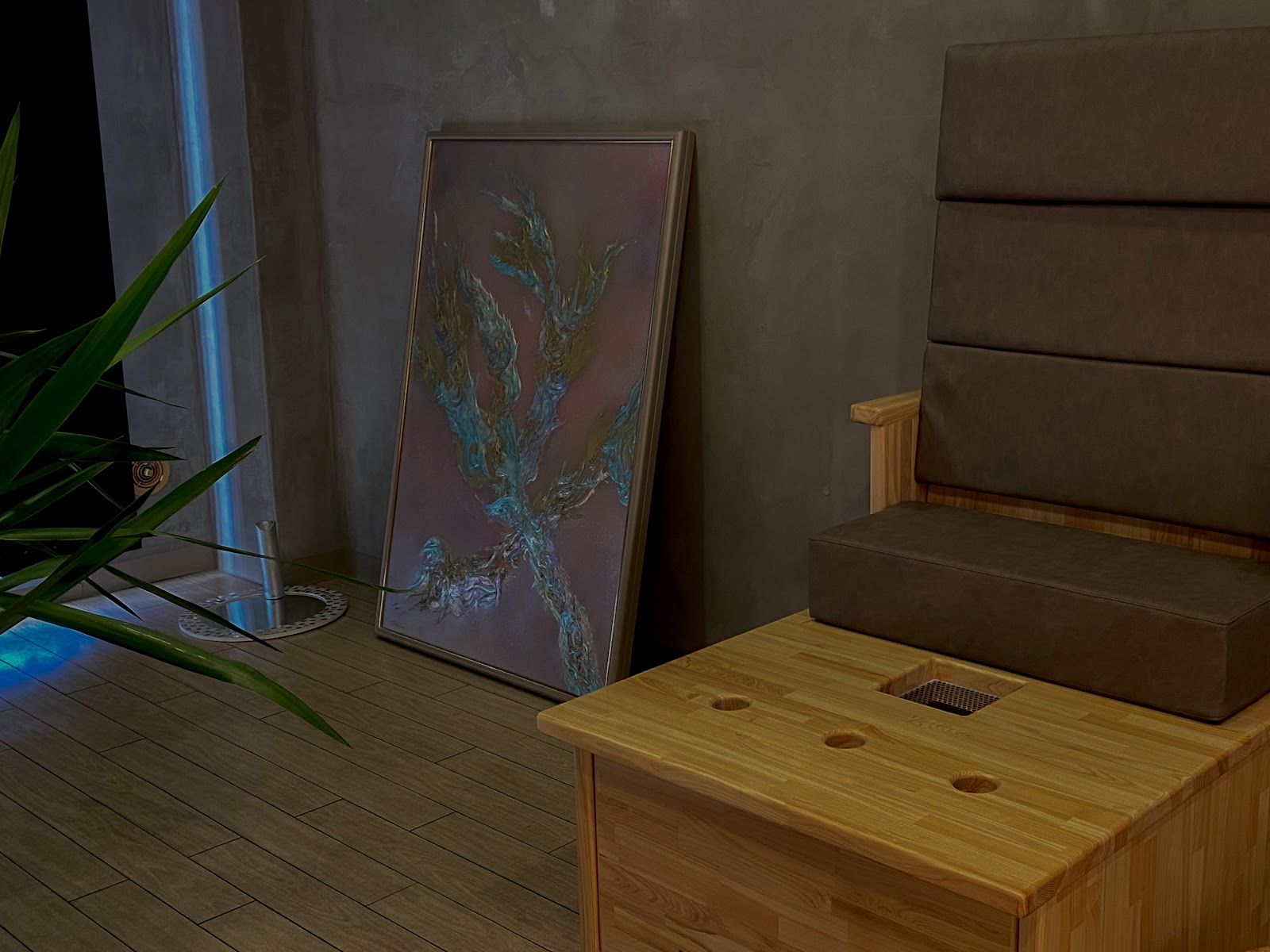
The room also features “Aura Art” by Takumi Bando, known as the host of The Bachelor Japan. This collection express “Aura Art” by Mr. Bando that uses color to express the life force inherent in every individual and the energy that flows through places and spaces. While admiring these pieces in “The Moon” room, you can feel the ki (vital energy) and spirit circulating within yourself, allowing for a profound sense of inner harmony.
Custom-Made Hinoki (Cypress) Chairs
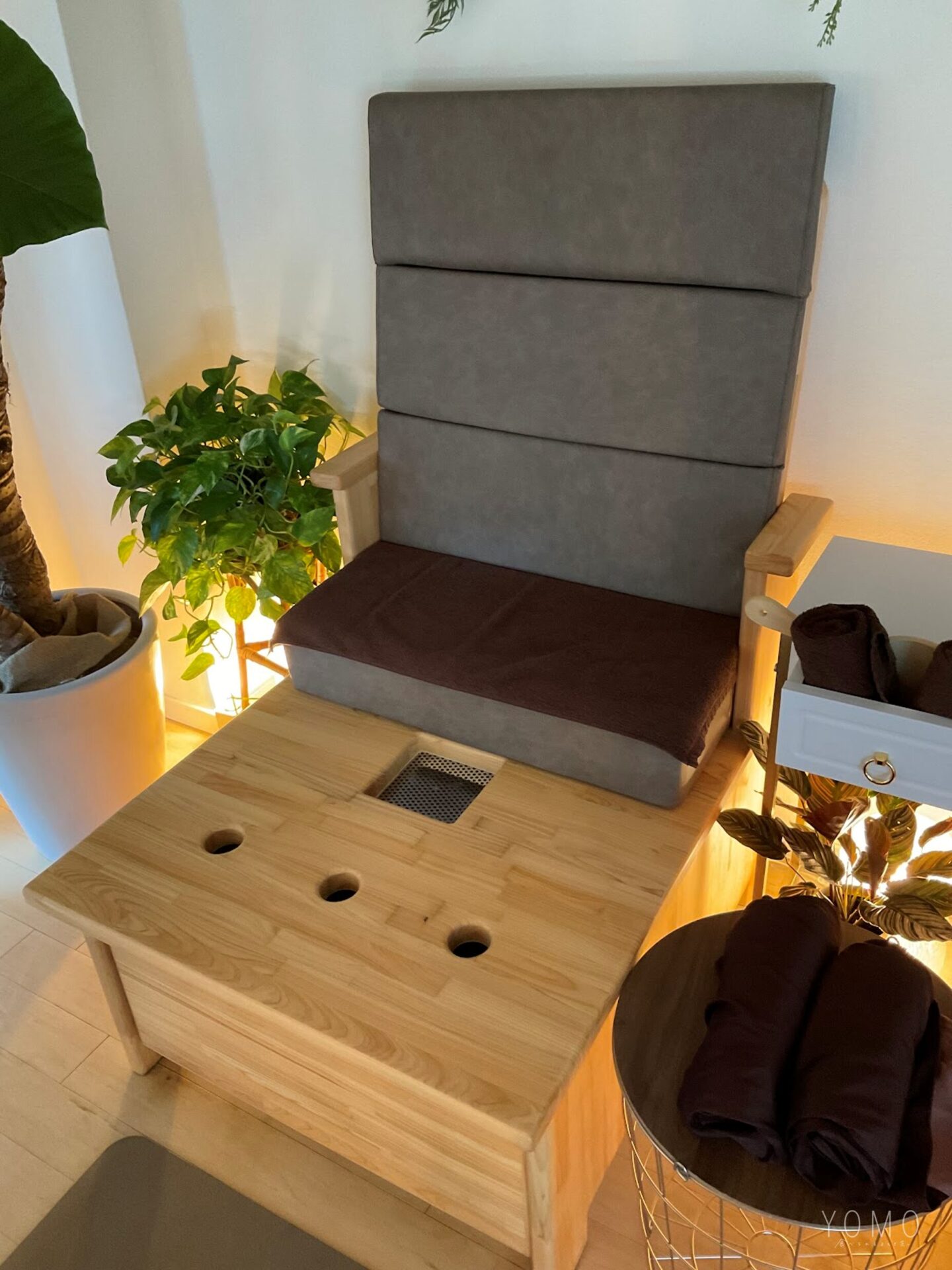
*Our Hinoki chairs are consistently sanitized with alcohol to maintain the highest standards of cleanliness.
At YOMO, we provide specialized yomogi-mushi chairs made from Hinoki (Japanese Cypress)—a material celebrated for being a “The ultimate trinity”: beautiful to the eye, distinctive fragrance and soothing warmth.
Hinoki is a timber deeply cherished by the Japanese people. In addition to its luxurious appearance, iconic scent, and natural warmth, our chairs are custom-designed to prioritize deeper relaxation. To ensure you remain comfortable throughout your session, the chairs feature a sturdy backrest and a generous seating area, allowing you to settle into your preferred position with ease.
4.Summary
In this feature, we explored the spirit of wabi-sabi—a unique aesthetic sense developed in Japan—and the philosophy of omotenashi as practiced by YOMO.
We are all profoundly influenced by our surroundings. Because we continue to navigate our daily live through both joyful times and moments of hardship, we invite you to turn your attention inward and dedicate time truly for yourself. Through yomogi-mushi, YOMO offers you a moment to restore your inner harmony.
We hope this article has offered inspiration in making your daily life even more fulfilling.
Thank you for reading to the end.
References / Bibliography
・Okamoto, Koichi (2023). Wabi-Sabi: A Liberal Arts Course for 8 Billion People. Tankosha.
・Koren, Leonard (2024). Wabi-Sabi: for Artists, Designers, Poets & Philosophers (Japanese Edition/Interpretation). BNN Publishing.
・Matsuoka, Seigow (2009). Nihon-ryu (The Japanese Way). Chikuma Gakugei Bunko.
・Omotesenke Fushin’an. “Learning About Chanoyu.” The Spirit and Beauty of Chanoyu.
https://www.omotesenke.jp/
・Weblio Kogo Jiten (Weblio Dictionary of Classical Japanese). “Sabu.” Accessed March 30, 2026.
https://kobun.weblio.jp/content/%E5%AF%82%E3%81%B6
・Weblio Kogo Jiten (Weblio Dictionary of Classical Japanese). “Wabu.” Accessed March 30, 2026.
https://kobun.weblio.jp/content/%E4%BE%98%E3%81%B6